When Property Development is Faith in Action

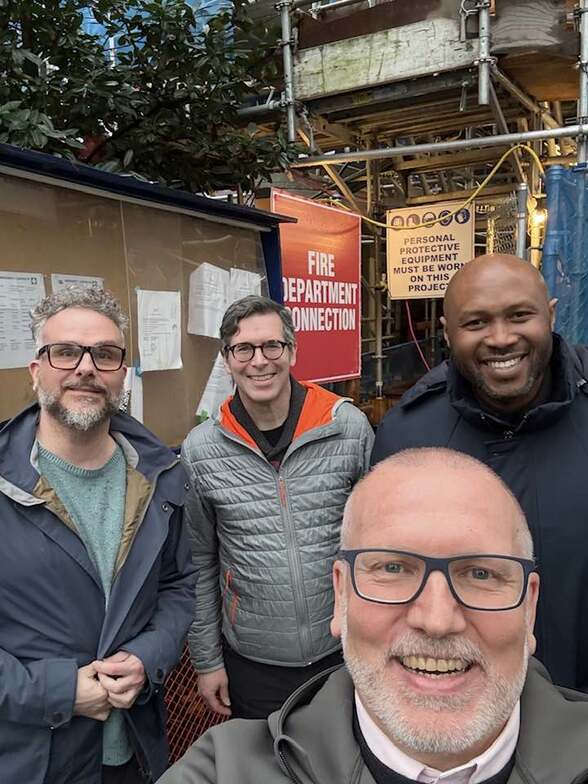

Earlier this year, the Archbishop, senior diocesan leaders, and staff had the opportunity to tour an in-progress affordable housing development in Vancouver, offering a hopeful glimpse of what faith-informed development can look like in practice.
The visit included the Archbishop, myself, and the Directors of Mission & Ministry Development and Finance & Property. While the project itself is not a development of the Diocese of New Westminster—it belongs to a separate non-profit society—it is being guided by Purpose Driven Development, the same development consultant engaged by the Diocese.
Throughout the tour, Purpose Driven Development’s commitment to integrating the values of the non-profit partner into every stage of the building process was clearly evident. The development is designed to provide affordable housing for women and female-headed families, and that commitment is reflected not only in who the building will serve, but also in how it is being built. Women are leading in the majority of development roles, including serving as construction managers—an intentional choice that aligns leadership with the community the building is meant to support.
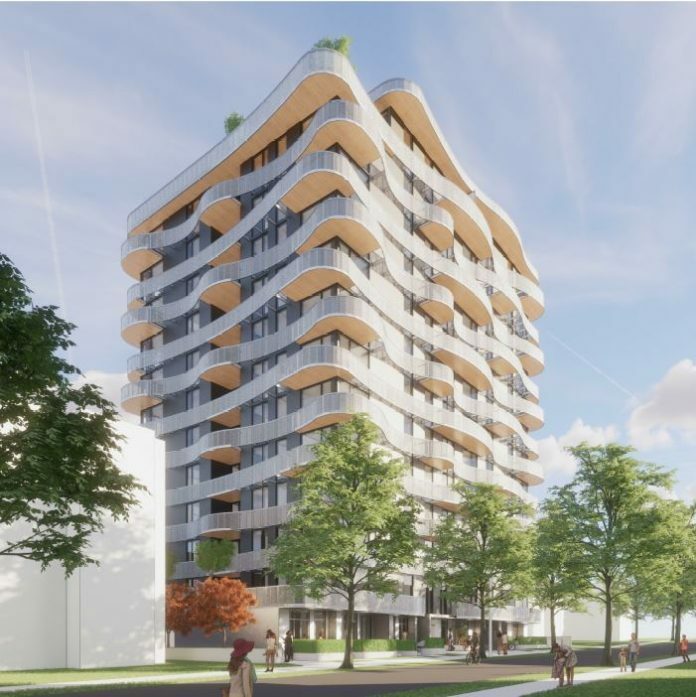
The 13-storey building will include a mix of housing options, ranging from just-below-market rental units to deeply affordable apartments for individuals and families with low incomes. This mixed-income model allows higher rents to subsidize lower-income units, ensuring long-term affordability while fostering a diverse and integrated community.
Purpose Driven Development is also challenging common assumptions about what affordable housing should look like. Rather than settling for smaller units, low ceilings, and inexpensive fixtures, the development prioritizes beauty and dignity. The apartments are being designed with more generous spaces, higher ceilings, and upgraded finishes—reflecting a belief that affordable housing does not need to be cheap or inferior to be financially viable.
One of the most striking moments of the tour came at the very top of the building. Instead of reserving the highest floor for premium penthouse units, the developers have dedicated it entirely to shared community space. Plans include a rooftop patio and garden, along with an indoor kitchen, all intended for the use of every resident in the building. Regardless of whether someone is paying near-market rent or rent geared to income, all will be able to gather in this space and enjoy some of the most breathtaking views in Vancouver.
Standing there, the project felt like a living expression of Mary’s Magnificat—an effort to “lift up the lowly,” quite literally, by ensuring that the most beautiful spaces are shared by all.
The experience prompted deeper reflection on the opportunities before parishes in the Diocese of New Westminster as we discern how best to use the land entrusted to our care. The Diocese is uniquely privileged: privileged to hold property with development potential, and privileged to have deep theological and moral foundations that can guide how that development unfolds.
As the tour made clear, church-led and church-inspired projects have the capacity to do more than build housing. They can extend mercy to those who are afraid, lift up the humble, and fill the hungry with good things. By using these privileges thoughtfully and creatively, the Diocese can contribute to the work of building God’s Kingdom—offering hope, dignity, and community in a world that deeply needs all three.
---
Photos:
1. Archbishop John Stephens, Archdeacon Andrew Halliday, Terrence Clark (Director of Finance & Property) and Rev. Tellison Glover (Director, Mission & Ministry Development) visit the Soroptimist building site. (photo: Archbishop John Stephens/Facebook)
2. A rendering of the Soroptimist building at 13th and Cambie. (GBL Architects)