Pilgrims Together: Part 2

The following Sunday we gathered at the National Cathedral of St. Mary and St. John. The service began in Tagalog. Around me, people sang, prayed, and responded confidently in a language I could not understand. Yet the liturgy felt remarkably familiar. The rhythms of Anglican worship, including the Scriptures from the Common Lectionary, prayers, creed, and Eucharist were the same rhythms that shape worship here in the Diocese of New Westminster.
When Archbishop John Stephens stood to preach, his sermon was in English. The liturgy remained largely in Tagalog. He reflected on the life of Jacob; the trickster, deceiver, and schemer who nevertheless became Israel. Jacob's story reminded us that God works not only through saints but also through flawed and complicated people. God refused to give up on Jacob and instead transformed him.
As I looked around the cathedral, I found myself thinking about Pentecost. We were speaking different languages, coming from different cultures, and carrying different
histories. Yet somehow, we were hearing the same Gospel and gathering around the same table.
That morning deepened my appreciation of the Anglican Communion. It is not our language, culture, or nationality that makes us one. It is Christ.
Fellowship and "Swallowship"
By the third day of the trip, I stopped counting cups of coffee. At St Mark's, Baguio on our way to Bontoc there was coffee waiting when we arrived. Along the mountain roads there was coffee at every stop. In parish halls,offices, mission stations, and family homes, someone was always asking whether we had eaten. Before one plate was empty, another appeared. Before one cup was finished, someone was offering a refill.
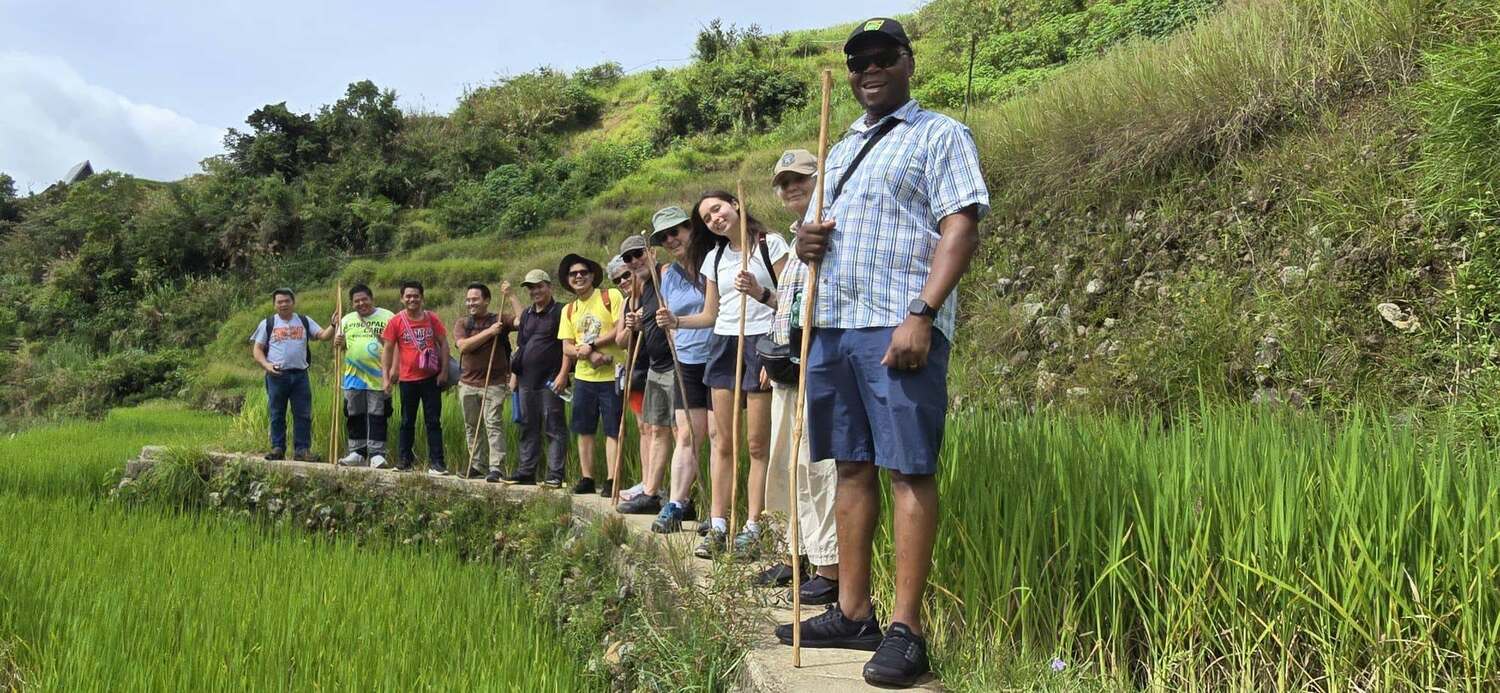
I quickly learned that hospitality in Northern Philippines is not an item on the programme but a ministry. One morning we arrived at a congregation tired after a hike down the mountain. But before any speeches were made or meetings began, food appeared. People who had far less materially than many Canadians were sharing what they had with extraordinary generosity.
Again and again, I found myself thinking of the early Church described in Acts: "They devoted themselves to the apostles' teaching and fellowship, to the breaking of bread and the prayers" (Acts 2:42).
In the Episcopal Diocese of Northern Philippines, fellowship and what I would call "swallowship" are inseparable. Meals are not interruptions to ministry. They are ministry in themselves.
The food nourished our bodies, but the hospitality nourished something deeper. Every meal communicated the same message: you are not strangers, you belong here.