
I like to think that I am fairly intelligent. There are days where my family might argue this but I have three degrees tucked away in a drawer somewhere, which are supposed to suggest something. So I am intelligent enough, I like to think. I have learned, though, and maybe so have some of you, that just because you are intelligent to some degree doesn’t mean that you won’t need to learn a lesson or two most days. Maybe every day. Intelligence and wisdom are not the same things.
I remember in my first parish, which was in South-Western Ontario, when one of the more senior parishioners was suffering from some ill health. His son lived in Alberta and so it took a couple of days for him to arrive. Now this son was a pretty bright guy. He worked as an engineer and people sought out his expertise all over the world. He had made plenty of money, was respected and considered a bright spark in the industry.
His father was a hard-working farmer who had a grade four education. He knew farming and how to make a living and ensure his family was well fed and contributing to the betterment of the world. He knew the best time to plant and harvest a crop and how to get the best results from the egg laying hens, but on paper he had little formal education.
Anyway, the son eventually arrived. Now as I said, the son was used to being in charge and giving advice and telling people the best way to do things. He had advice and plans for his father as well now that he had fallen into ill health. And the father listened patiently, to all this planning and advice… for a time and than gave up on that. “You know Ken,” he said to his son. “You know Ken, for a really smart man sometimes you are really dumb.” And that was the end of the conversation.
I was thinking about that because of our gospel reading for today. Jesus loved to tell stories and many of us who have been attending church for a while might have heard many of them before. And in a way that is a shame because they lose a little bit of their impact when we think we already know what they are about and their punchline. But Jesus said to the crowd that was listening many years ago. “Then the kingdom of heaven will be like this. Ten bridesmaids took their lamps and went to meet the bridegroom. Five of them were foolish, and five of them were wise.” Now when we read the rest of the story we are pretty sure that we know which ones are foolish and which ones are wise. But I started to wonder about that a little bit.
You see with stories or parables there are always lots of ways to consider them, that is the beauty of them. There were two camps for those bridesmaids. I wonder if camp number one had actually prepared pretty carefully. I wonder if they had tried to work out exactly how much oil they would need for their lamp. Let’s see… the bridegroom is supposed to arrive at 9:00pm, there are no clocks being changed this year, and the average amount of oil burned per hour when the lamp is lit is this much when there is no south-westerly breeze, and the premium oil we purchased burns a little slower than the regular grade and so we should be fine with just the oil we have. We are good.
And the other camp, maybe, just thought, wow, well we have no idea what the oil burning rate is when there is a full moon and so we will just buy another flask of oil just to
be sure… and there is a two for one special on the low grade oil at the corner store at the moment so let’s just go with that. I wonder if the conversation went more like this.
The really bright group trying to work out just exactly how much oil they needed and the other group simply buying more just to be sure. In this case the wise ones were not the most intelligent ones but the most prepared. Intelligence and wisdom are not always the same thing.
The thing is, though, that this is not a parable about oil burning ratios for lamps. It is not a tale of a bridegroom arriving late and upsetting the calculations. It is not a story about trying to predict how much oil is needed to show that you are a member of the wise group. It is not about having enough oil, either. It actually has nothing to do with that. It might seem like it does but is doesn’t.
You see, the parable is really about the light coming from the lamp not the oil itself. We need the oil, our faith, it is true but it is needed to help provide a light. This was a story all about the light and we don’t always remember that. With this light we recognize the presence of the bridegroom, God, Jesus, the Holy Spirit. And we are called to be bearers of this light in this world. We are, you and me, light bearers not oil bearers, there is a big difference.
I read an article the other day that quoted from Ayad Akhtar’s book The Radiance which tries to help us consider this light from our lamps, this light from our souls, this light that has helped us see the holy presence of God in our midst.
He writes about a university student has an appointment with her lecturer and decides to ask a question about spirituality. “’Do you believe in God?’ Her tone shifted; earnestness glistened in her eyes. ‘It’s not that weird a question—is it?’ she asked, lifting her hand up to her brow to shield her eyes from a burst of afternoon sun against the window behind me. ‘Maybe it is. I’m sorry.’
“No, no, it’s not. I mean it might be a little above my pay grade, but… why are you asking?’
‘Don’t you think it’s weird that we don’t ask it more? Why there’s something ‘—she touched the table, then herself—‘instead of nothing? …All these great books and art—what’s the point if we ignore the only question that matters?’”
We are called to recognize the bridegroom or God’s light in this world or Christ’s presence in this world and in turn be ones who reveal it in how we live. Our faith, the oil in the lamps is vital, it is true, but it is the starting place not the end place. It allows us to recognize God in the world, in others and in ourselves.
The world feels like a complicated and strange place at the moment. It feels like it is so hard to tell what is truth and what is not. Compassion, concern for the other, non-violence, hope for peace seem to be things that can simply be ignored because they are not considered convenient. Despite a climate emergency, thousands of refugees all over the globe, war in Ukraine, Iran, Gaza, South Sudan and other places, fear of the stranger, disregard for corruption, and a few other things besides many are acting as if this is perfectly normal, expected and even encouraged. Many are pretending to be wise in and amongst all of this foolishness. Even when lamps sputter and burn right out so that little to no light is seen, some pretend that this is all OK. Sometimes intelligence and wisdom are not the same thing.
But we are followers of Jesus Christ. We have come to see a light in him, and recognize that we have been tasked with bearing that light in the world. A light that
respects the dignity of every human being, calls us to love God and our neighbours as ourselves, calls us to be peacemakers and hunger and thirst for righteousness. We received this light at our baptism with these words: Receive the light of Christ, to show that you have passed from darkness to light. Let your light so shine before others that they may see your good works and glorify God in heaven. We give a candle to a newly baptized person when these words are said but we could also offer a lamp and some oil.
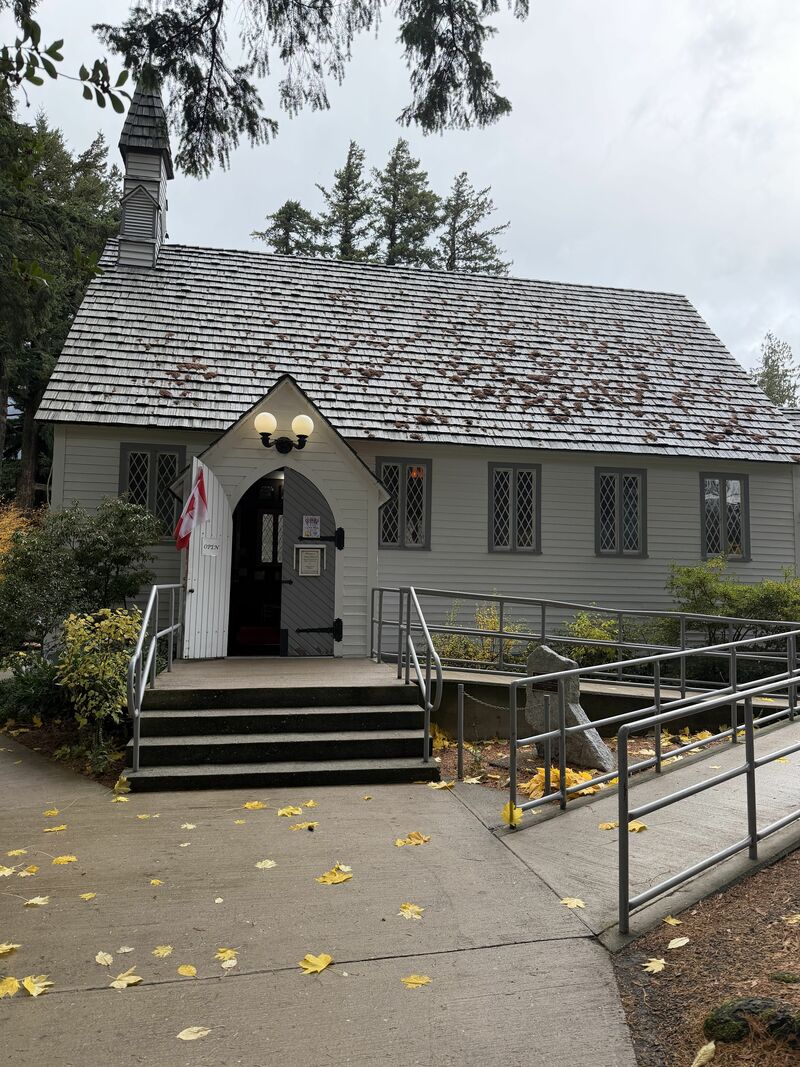
And for 165 years this parish of Christ Church has been focussing on this light and revealing this light in this community of Hope. For 165 years, this place has been handing out oil, so to speak so that indeed a new light can shine in and all who might come through these doors. For 165 years this church has been a beacon when more beacons are needed to show that indeed there is a greater path and a greater way through this life. One centred on grace and love. May your light so shine before others that they may see your good works and glorify God in heaven. God knows this is needed in our own lives and in the world of this day. Because intelligence is not the same thing as wisdom.